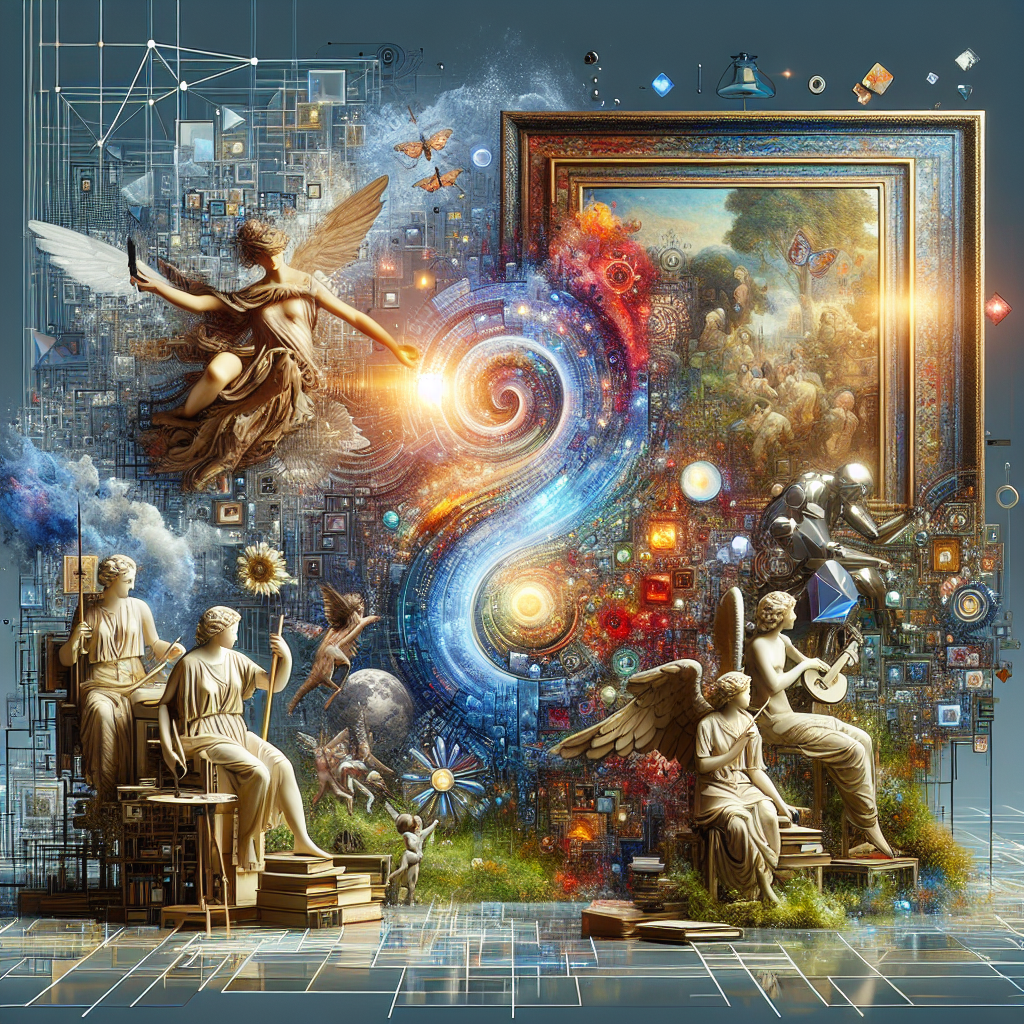
Image generation technology has revolutionized the art world, enabling artists and creators to produce remarkable visual content with the assistance of artificial intelligence (AI). This article delves into the history, advancements, and implications of AI-generated imagery, exploring how it shapes creativity and challenges traditional notions of artistry.
The History of Image Generation
Tracing the evolution of image generation technology reveals a rich tapestry woven through centuries of artistic experimentation and technological advancement. The seeds of automated art can be found in ancient history, where the likes of automatons and rudimentary machines hinted at the potential for mechanically produced images. However, the formal study of artificial intelligence, as it pertains to art, took shape in the 1950s, laying the groundwork for what would evolve into the field of AI-driven image generation. A pivotal moment occurred in 1973 when British painter Harold Cohen developed AARON, an early computer program designed to autonomously generate artwork by simulating artistic principles and understanding the fundamentals of visual art. This marked the genesis of AI’s interaction with creative practices, as artists began to see computers not merely as tools but as collaborators in the creative process. Despite the nascent nature of computing power and algorithms, the groundwork for today’s sophisticated image generation was being laid.
During the early 1960s, researchers began to dabble in digital image processing, using basic algorithms to alter and enhance images. However, significant developments in the field didn’t occur until the late 1980s, when machine learning models began integrating with image generation techniques. This lag in progress highlights the limitations of early technology, which constrained artistic expression. Yet, a transformative breakthrough arrived with the introduction of AlexNet in 2012, a convolutional neural network that revolutionized image recognition and laid the foundational framework for modern AI-driven image synthesis. Simultaneously, the release of ImageNet in 2009 provided a substantial dataset of labeled images that catalyzed advancements in AI capabilities and fueled annual object identification competitions that further honed algorithmic performance.
With the advent of Generative Adversarial Networks (GANs) in 2014, we witnessed a paradigm shift in generative AI. This architecture operates through a competitive framework consisting of a generator and discriminator that collaborates to produce unprecedentedly realistic images. Following GANs, diffusion models emerged in 2015, developed at Stanford University, enabling advanced image generation through a sophisticated process of detecting and replicating intrinsic patterns. The proliferation of tools such as Google Deep Dream in 2015, which produced surreal images by blending recognizable features with original photographs, highlighted the creative possibilities unleashed by AI. By 2021, further innovations like DALL-E by OpenAI showcased AI’s ability to generate high-quality images from textual descriptions, demonstrating AI’s potential in translating human concepts into visual art.
While the introduction of solutions like Stable Diffusion and Midjourney in 2022 democratized access to high-quality AI tools, it also sparked discussions about the implications of AI in art—questioning the role of the artist, the authenticity of the creations, and the future of artistic expression in an age where machines can perceive and interpret the world similarly to humans. The historical context of image generation thus encapsulates not only technological progress but also an evolving dialogue about creativity, ownership, and the very essence of art itself.
Sources:
Conclusions
In conclusion, image generation through AI not only enhances artistic expression but also provokes critical discussions about authorship and creativity. As this technology continues to evolve, it promises both opportunities and challenges, pushing us to redefine art’s landscape in the modern age.
Leave a Reply